
HELPING SOCIETY NAVIGATE CHANGE
Dedoctive Navigators help communities respond to emerging threats.


We are a social enterprise delivering tech-for-good. With the purpose-based support of government / charitable grants, and in partnership with industry stakeholders, Collaboration Tools Ltd is using Dedoctive to build trustworthy AI Navigators to help communities everywhere respond to emerging threats – with a particular focus on the existential challenge of our age, climate change.
All the Navigators below and the custom products we develop can be integrated easily into existing websites, processes, and tools using modern standards.




- PROTECT: Ensure that adoption of new technologies keeps risks as low as reasonably practicable and empower effective humanitarian response to crises
- Safety Navigator helps human experts measure and improve the safety, risk, and compliance of modern technology systems, from climate adaptation to infrastructure protection and more.
- As part of SIREN (Safety & Incident Response for building Emergency Networks), we are developing RouteMAIT to empower disaster responders by providing swift and effective routing for debris clearance, casualty transportation, wildfire suppression, search and rescue, and relief aid distribution.
- Crisis Navigator helps localities predict, understand, and proactively mitigate the effects of natural catastrophes on the supply of critical resources such as food and medical supplies.
- PREPARE: Develop the human skills capacity needed to make homes and other buildings greener and healthier
- Retrofit Navigator helps homeowners, advisors, architects, and builders make homes and other buildings warm, comfortable, and sustainable, by providing them with designs, plans, and local costs for practical construction projects.
- Green Skills Navigator helps people of all ages find fulfilling and rewarding work locally, by providing personalised pathways into green jobs, highlighting opportunities with local employers, directing workers towards suitable training services, and helping trainees obtain supportive funding.
- Place Navigator helps developers and communities ensure that planning applications align with modern community- and wellness-oriented placemaking, by helping them review applications against best practices, local guidelines, and national regulations.
- PROVIDE: Help communities create the infrastructure necessary to respond effectively to climate change and support their most vulnerable members
- Adaptation Navigator layers Dedoctive decision-making workflows over sophisticated predictive flood modelling to help communities make assured adaptation decisions.
- Wellness Navigator helps users develop safe, personalised and evidence-informed wellness plans, while giving clinical and delivery partners a governable framework for preventive, low-intensity self-help support.
- Healthcare Navigator helps patients understand and doctors review clinical recommendations, by summarising the relevant parts of the patient’s health record and analysing its implications for a proposed diagnosis / prognosis / treatment plan.
We also build custom AI Navigators for organisations to help their staff access information flexibly at point of need, publish effectively to stakeholders, and more.
Featured AI Navigator
Safety Navigator
Helping society adopt new technologies safely
Dedoctive Safety Navigator helps human experts measure and improve the safety, risk, and compliance of modern technology systems, from climate adaptation to infrastructure protection and more. It automates the extraction of safety arguments, bowtie diagrams, and compliance audits from complex documentation and data, showing the outputs visually with potential weaknesses highlighted.
For duty holders of complex, potentially AI-enabled, military platforms, Safety Navigator helps maintain Authority to Operate following engineering or operational changes. Unlike mainstream safety tools, we use a Sovereign UK AI platform that has been academically-validated as fully trustworthy to semi-automate the review of safety arguments, creation of bowtie diagrams, and assessment of compliance. The evidence is an official case study authorised by Dstl and published by the MoD.
Like all Dedoctive products, Safety Navigator can be integrated easily into existing websites, processes, and tools using our free visual designer.
Modern technology systems, from climate adaptation to infrastructure protection and more, are evolving faster than traditional assurance methods can handle. This makes it hard to deploy at scale and pace while ensuring that systems remain safe and are used safely. With increasing pressure to adopt new technologies rapidly, the risk grows that functionality may be deployed without robust safety assurance, exposing individuals and wider society to hazards of unknown magnitude.
Hence, we received government funding to develop, in partnership with the Centre for Assuring Autonomy at the University of York, an AI assistant that supports safety engineers in maintaining credible safety cases and managing associated risks amidst rapid change. The resulting product, Safety Navigator, enables deep analysis of system arguments, context, assumptions, dependencies, and evidence, to help measure and improve safety, risks, and regulatory compliance. The architecture allows it to adapt across domains while maintaining alignment with safety assurance best practices, making it ideally suited for multipurpose systems under continual change.
The University of York verified that Safety Navigator’s outputs meet all UK government Data Quality dimensions – all information provided is correct, complete, consistent, current, concise, and checkable. This is possible due to Dedoctive’s unique architecture.
Safety Navigator does not replace safety and risk professionals . Rather, it augments their efforts, by parsing technical documentation rapidly to provide engineering-grade graphical outputs that help human experts focus their attention on high priority issues. This is particularly valuable when change requests cut across multiple functional areas or introduce new system dependencies.
By highlighting deltas in safety cases and guiding mitigation efforts, the tool helps ensure that risks remain As Low As Reasonably Practicable and tolerable without slowing innovation. This reduces the time and cost required to deploy new technologies, enhancing an organisational user’s ability to field cutting-edge capabilities while maintaining rigorous safety standards.
Features
The version of Safety Navigator developed with government funding automatically transforms safety documentation into Goal Structuring Notation (GSN, a visual format that clarifies the logic and evidence of safety cases), while analysing the argument to identify potential weaknesses, inconsistencies, or evidence gaps that require further attention.

We have since extended Safety Navigator to support risk management and compliance assessment.
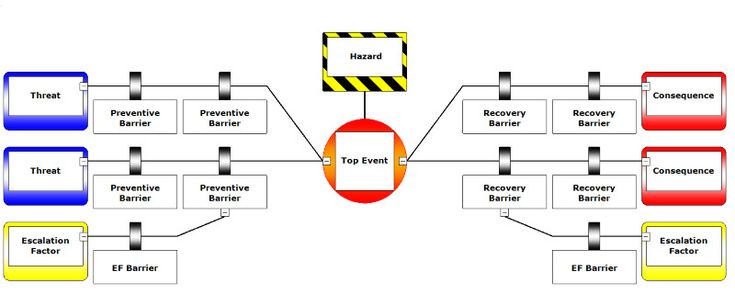
Risk management. Bowtie diagrams are essential tools for mapping complex risk scenarios and ensuring robust safety controls, but creating them has always been a slow, manual process. With Safety Navigator, the user can select a GSN node (e.g., representing operating context, a claim, an assumption, or a piece of evidence) to see a bowtie diagram showing the threats and consequences associated with the node being invalid.
Compliance assessment. Safety Navigator automatically creates from engineering documents and data an overview document (e.g., a Production Readiness Review or Safety Case Report), then lets the user customise the document with agentic automation. It then evaluates the system against applicable policies, regulations, and standards, updating the document to recommend approval / rejection and mandate appropriate conditions / amendments.
As with all Dedoctive products, all Safety Navigator outputs are fully trustworthy and verifiable. Being drawn only from a “knowledge model”, outputs are guaranteed to be correct, complete, consistent, current, concise, and checkable. Each statement is accompanied by hyperlinks to the original sources, and these hyperlinks are also presented in a visual mind-map. Workflows use the open BPMN standard, and can be customised using a simple visual tool.