
Think of traditional safety analysis like a paper map; it’s static, hard to read, and quickly becomes out of date. Dedoctive is like a live GPS system. It takes all the raw data (the roads), understands the connections (the routes), and updates in real-time as the situation on the ground changes, always showing you exactly where its information is coming from.
Part 2 of 5
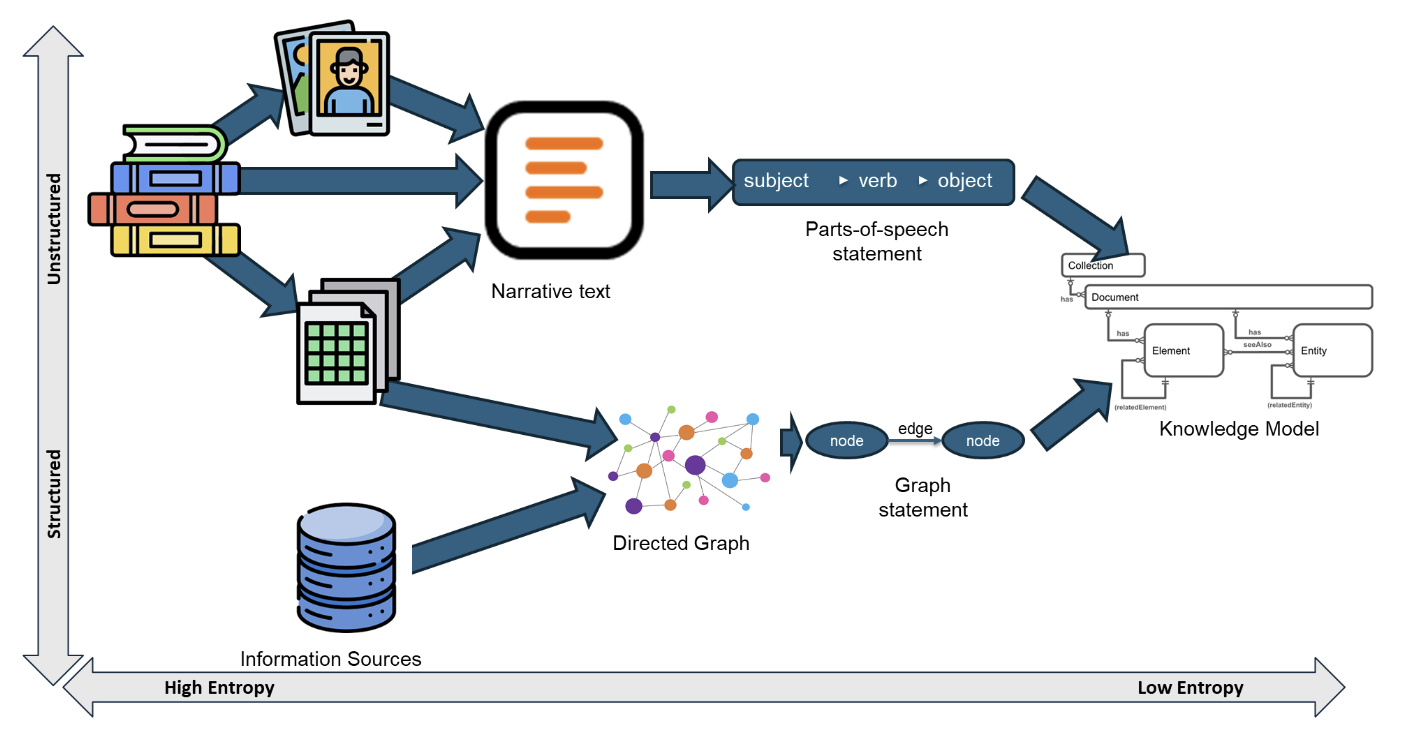
To make documents useful for an AI, Dedoctive first performs forensic analysis on your collection. It doesn’t just read the text; it treats your data like a giant puzzle.
- Breaking It Down: It takes unstructured text, images, and tables and turns them into a unified format called subject-verb-object facts.
- Handling the Tricky Stuff: It can “read” diagrams and images, converting them into narrative descriptions. It also performs “Table Annealing,” which means it can take a large table split across three PDF pages and “stitch” it back together into one logical piece.
- The Master Index: These facts are stored in a Knowledge Model. Think of this as a highly sophisticated library where every fact is cross-referenced by its meaning (semantic), the words used (lexical), and its connections to other facts (graphical).
This ensures the AI is only using your data to answer questions, not random information it found on the internet.
To learn more about how Dedoctive uses a combination of deterministic and agentic techniques to solve this giant puzzle, continue following this blog series.
Leave a Reply
You must be logged in to post a comment.